

このガイドでは、複雑でコストのかかる IT プロジェクトを監督する上での課題に対処するために、一般的なポートフォリオ管理以上の専門的なプロセスが必要な IT ポートフォリオ管理について説明します。
このページでは、IT ポートフォリオ管理の目標、IT ポートフォリオ管理プロセスのステップバイステップ ガイド、IT ポートフォリオ管理とプロジェクト ポートフォリオ管理の違いについて紹介しています。
ポートフォリオ管理とは
ポートフォリオ管理とは、ビジネス内のプロジェクトを戦略的に管理・組織化することを指します。ポートフォリオ マネージャーは、意思決定を行う際に、プロジェクト予算、リソースの使用、タイムラインなどの要素に重点を置きます。
IT ポートフォリオ管理では、IT 部門のプロジェクトとチームにのみ焦点を当てます。IT ポートフォリオ マネージャーは、成長可能性、企業価値への準拠、および IT ベンチャーのコスト削減について、IT プロジェクトを評価します。
詳細については、プロジェクト ポートフォリオ管理の概要をご覧ください。
IT Portfolio Governance
IT portfolio governance is the decision-making framework that companies use to select and manage IT investments. It helps leaders align technology work with business strategy. Good portfolio governance is important for allocating resources effectively while mitigating risk. It also helps ensure that projects, programs, and assets continue to deliver value.
Here are the core components of IT portfolio governance:
- Strategy: Define the goals, priorities, and decision rules that guide IT investments.
- Enterprise Architecture: Show how systems, applications, data, and infrastructure connect across the organization.
- IT Portfolio Management: Apply governance rules to evaluate, prioritize, balance, and monitor IT work.
- Business Case Analysis: Compare expected costs, benefits, risks, and value before approving an IT investment.
- Capital Asset Planning: Plan, fund, track, and manage major technology assets across their lifecycle.
- Program Management: Standardize the planning, coordination, and delivery of related IT projects.
- Performance Management: Track metrics, report outcomes, and measure portfolio value against strategic goals.
→ Learn how PPM software by Smartsheet can automate workflows, enhance visibility across portfolios, optimize resources, mitigate risks, and more.
IT ポートフォリオ管理が重要な理由について
IT ポートフォリオ管理は、企業がポートフォリオの影響と進捗を大局的に把握する上で重要な役割を果たします。これにより、組織は IT 部門の財務、人員、リソース面でのニーズを確実に満たすことができます。
2014 年に、IT プロジェクトおよびポートフォリオ管理市場の収益は世界全体で 36 億ドルとなり、2024 年までにさらに 10 億ドル増加することが見込まれています。IT 部門の価値と複雑さが増すにつれて、プロジェクトにはさらなる監視が必要になります。
IT プロジェクトがビジネスにとって重要な収入源になったり、リソースの使用先になった時点で、IT ポートフォリオを管理する必要があります。
IT ポートフォリオ管理の課題
IT ポートフォリオ管理は複雑で困難な作業です。以下は、IT ポートフォリオ マネージャーが直面する一般的な課題の例です。
- 実施: スキルが高度に専門化され、プロセスが確立されている IT 環境では、変更を実施することが困難な場合があります。
「新しいタスクや、その遂行を容易にするツールを受け入れることに反対する人もいるかもしれません。これは、新しいポートフォリオ管理ツールを人々に使ってもらう上での課題となる可能性がありますが、あらゆるレベルの関係者全員にその価値を教えることで克服できます」と Nabity 氏は言います。 - レポート作成: IT プロジェクトは主題や範囲がさまざまであるため、標準化されたレポート システムを作成することが困難な場合があります。
「パフォーマンス レポートにはさまざまな形式があります。残念ながら、システムによって異なる形式が使用されるため、データに互換性がなく、何も自動化されていない可能性があり、結果的にレポート作成に時間がかかってしまう場合があります。レポートが生成される頃には、そのレポートの内容は最新ではなくなっています。多くの企業はリアルタイムかつ手動の非アクティブ レポートを使用していますが、これも潜在的なエラーや効率の低下につながる可能性があります」と Nabity 氏は言います。 - リソース管理: IT プロジェクトに不可欠なリソースは、チームの技術的な知識とスキルです。適切にリソース管理を行うことで、チームの燃え尽きを防ぎ、最も重要なリソースを最大限に活用することができます。
「人材には限りがあり、優先順位の低いプロジェクトの希望リストもあり、それらすべてを実行する時間も限られています。組織はまず、プロジェクトだけでなく成果の達成に重点を置いたチームの編成を計画し、それを理解することにより多くの時間を費やす必要があります」と Khumprakob 氏は言います。 - 協力: 部門によってニーズが異なるため、チーム間でタイムライン、レポート、成果物を一致させることは難しい場合があります。
「私は HP の社内コンサルタントとして IT チームと連携していました。私たちはポートフォリオ管理ワークショップを実施しようとしましたが、これは個人的に習得する個人競技ではないことがわかりました。ポートフォリオ管理は関係者全員の協力を必要とする団体競技です」と Englund 氏は言います。 - マルチタスク: 有能な IT ポートフォリオ マネージャーは、多数のプロジェクトを監督することができます。ポートフォリオにおける各プロジェクトの特定のニーズを特定し、それに対処することが重要です。
- 可視性: プロジェクトのステータスを表示し、そのレポートを作成するためのプロセスを標準化することが重要です。そうすることで、冗長性を防ぎ、他のマネージャーが IT プロジェクトの進捗状況を追跡できるようになります。「大きな課題は透明性を確保することです。さまざまな場所で複数の IT プロジェクトがあり、それぞれ異なる形式に従っている場合があります。データのレポート作成が標準化されていない場合、さまざまなプロジェクトを客観的に評価することが難しくなります」と Touesnard 氏は言います。
Why Is IT Portfolio Management Important?
IT portfolio management is important because it provides organizations with a clear framework for evaluating, prioritizing, and governing technology initiatives. Without it, technology spending may not align with strategy. A structured portfolio helps leaders fund the right initiatives, adapt to change, and measure business value.
Learn more about the importance, functions, benefits, challenges, and more with this comprehensive guide to project portfolio management.
Who Manages IT Portfolios?
IT portfolio managers usually manage IT portfolios with support from IT leaders, finance teams, project managers, and business stakeholders. They oversee budgets, resources, timelines, risk, and value so the organization can prioritize technology work and keep investments aligned with business goals.
Learn more about the benefits, challenges, and tips to overcome them, the process, software, tools, and more with this guide to enterprise project portfolio management (EPPM).
IT ポートフォリオ管理における目標
IT ポートフォリオ管理の目標は、IT 部門の過剰な負担を回避し、適切に管理されたポートフォリオを維持することです。ポートフォリオ管理を成功させるには、可視性を重視し、投資価値を最大化し、意思決定を促進する必要があります。

「戦略的目標は、すべてのプロジェクトをビジネス戦略に結び付けるために重要であり、IT 部門は他のビジネス部門の目標との整合性を確保する必要があります」と Englund Project Management Consultancy (イングランド プロジェクト マネジメント コンサルタンシー) の創設者である Randall Englund 氏は言います。
IT ポートフォリオ管理における一般的な戦略的目標は次のとおりです。
- アセットとイニシアチブの一元的な可視性: すべてのレポートとプロジェクト情報をアクセスしやすい場所に保管します。「チームがタイムリーで情報に基づいた意思決定を行えるよう、情報に簡単にアクセスできるようにするべきです」と SpinupWP (スピンアップ WP) の CEO である Brad Touesnard 氏は提案します。
- プロジェクトの優先順位付け: 時間とリソースを最も効率的に活用するために、基準が標準化されているプロジェクトに重点を置きます。適切な優先順位付けにより、IT 投資の価値を最大化し、リスクを最小限に抑えることができます。
- 経営陣による意思決定の促進: 経営陣がどのプロジェクトのパフォーマンスが良好であるかを特定し、適切な措置を講じることができるよう、必要な情報を提供します。
- リソース管理: 利用可能なリソースを最大限に活用することで、ROI を最大化し、IT チームへの過度の負担を回避します。
「各プロジェクトに必要なリソースを決定し、最優先のプロジェクトに資金が充てられるよう各カテゴリ内で線引きを行います。優先順位の低いプロジェクトについては、資金を割り当てないか、リソースが利用可能になるまで保留にします。その最大の利点は、特定のプロジェクトに十分な資金が割り当てられ、一度に進めるプロジェクトの数を減らすことができるという点です。こうすることで、時間の経過とともに、より多くのプロジェクトを完了させることができます」と Englund 氏は言います。 - 経営陣の賛同: 現行のプロジェクトが順調に進んでいることを確認し、それを実証することで、新しいプロジェクトに対する経営陣の賛同を確保します。経営陣の賛同を得ることで、他のマネージャーやチーム メンバーも参加しやすくなります。
「IT ポートフォリオ管理プロセスを設定する際の最大の課題の 1 つは、機能部門マネージャーにプロセスへの参加とサポートを促すことです。つまり、プロセスは簡単に理解できるものでなければならず、マネージャーが懸念事項やリソースの割り当てについて自分たちの意見が聞き入れられていると確信できる必要があります」と Englund 氏は言います。 - 効率: 時間とリソースの使用を最適化することで、より多くのプロジェクトを完了し、さらなる利益を得ることができます。「リソースを最適化して、信頼性、柔軟性、拡張性に優れたアクセスを提供することで、生産性とモビリティを向上させることができます」と Touesnard 氏は提案します。
IT Portfolio Management Use Cases
IT portfolio management use cases often fall into three categories: strategic, operational, and financial. Strategic means deciding what to invest in and why; operational refers to managing execution and delivery on an ongoing basis; and financial includes everything to do with allocating and evaluating funds and investment value. Several examples can be included in multiple categories because many portfolio decisions affect strategy, operations, and finances simultaneously.
Strategic Use
Here are some strategic use examples of IT portfolio management:
- Strategic Alignment: Compare proposed IT work against business goals, customer needs, risk, and expected value before approving new projects.
- Digital Transformation Planning: Group cloud, automation, data, AI, and modernization initiatives into one portfolio so leaders can sequence work and avoid competing priorities.
- Application Rationalization: Review the application portfolio to retire duplicate, outdated, or low-value systems and reinvest in tools that better support the business.
- Innovation Prioritization: Evaluate emerging technology ideas against capacity, cost, business value, and risk before moving them into active delivery.
Operational Use
Here are some operational use examples of IT portfolio management:
- Resource Capacity Planning: Match IT demand with available people, skills, time, and funding to help teams avoid overcommitment.
- Project and Program Oversight: Track timelines, dependencies, issues, and delivery status across related IT initiatives instead of reviewing each project in isolation.
- Risk and Compliance Management: Identify cybersecurity, vendor, regulatory, and delivery risks across the portfolio to help leaders prioritize mitigation efforts.
- Service and Asset Lifecycle Management: Monitor systems, infrastructure, and technology assets from launch through maintenance, replacement, or retirement.
Financial Use
Here are some financial use examples of IT portfolio management:
- Budget Prioritization: Rank IT investments by value, cost, urgency, and strategic fit to enable leaders to fund the highest-priority work first.
- Cost Optimization: Compare spending across projects, applications, vendors, and infrastructure to identify waste, duplication, and opportunities for savings.
- Investment Performance Tracking: Measure whether IT projects deliver expected benefits, ROI, cost reductions, or business outcomes after approval.
- Capital Planning: Plan and manage major technology investments, such as infrastructure upgrades, platform replacements, and enterprise software deployments, across budget cycles.
IT Portfolio Management Framework
An IT portfolio management framework gives teams a repeatable workflow for processing technology requests. With an effective framework, demand can quickly move through approval, delivery, and adjustment. A frameworks helps organizations consistently prioritize work and monitor portfolio health when business needs, budgets, risks, or capacity change.
Here are the main stages in an IT portfolio management framework:
- Collect Demand: Capture project requests, system needs, maintenance work, risk items, and improvement ideas through a consistent intake process.
- Categorize Work: Group requests by type, like growth, maintenance, compliance, security, infrastructure, modernization, or transformation.
- Assess Value and Effort: Review expected benefits, cost, urgency, risk, dependencies, staffing needs, and timing before work moves forward.
- Rank and Select Work: Compare requests against shared criteria and choose the work that best fits available capacity, funding, and business priorities.
- Sequence the Roadmap: Order approved work based on dependencies, deadlines, resources, and business impact.
- Monitor Portfolio Health: Track status, spend, capacity, risk, delivery progress, and expected outcomes across active work.
- Rebalance as Conditions Change: Rebalance work when priorities, budgets, risks, or performance change. This might mean pausing or accelerating work, reallocating resources, or shifting timelines.
Improve and accelerate productivity, boost efficiency, balance workloads, simplify time tracking, improve project estimates, and more with Resource Management by Smartsheet.
IT Portfolio Management Tools and Software
IT portfolio management tools help teams centralize technology work, compare demand, manage resources, and report performance across projects, assets, applications, and services. The right platform can improve portfolio visibility, automate routine updates, support governance, and help leaders connect IT investments to business outcomes.
Here are IT portfolio management tools and software options to consider:
- Smartsheet suits organizations that need an intelligent work management platform for IT portfolio visibility, demand tracking, capacity planning, and executive reporting.
- Planisware suits organizations that need structured request intake, comparable project scoring, resource and capacity management, and visibility across IT, application, technology, capability, and project portfolios.
- Planview fits enterprises that need to prioritize, centralize, standardize, and model portfolio work while balancing resources, capacity, risks, and funding across large-scale initiatives.
- ServiceNow suits organizations that want to connect demand, resources, projects, and portfolio oversight inside a broader workflow platform for strategy, value, and delivery management.
- SoftwareOne fits organizations that need portfolio management support for software and cloud estates, including governance, risk reduction, procurement, use rights, SaaS visibility, and spend optimization.
Smartsheet for IT Portfolio Management
IT portfolio management by Smartsheet provides organizations with a single platform to align IT investments with business goals, prioritize demand, plan capacity, manage scope, and report portfolio performance. Teams can centralize IT requests, connect data across tools, support multiple delivery methods, and scale repeatable processes across projects. Watch a demo, today!

Smartsheet Control Center
Control Center improves consistency in project delivery, automates project creation, aggregates portfolio reporting, streamlines engagement, and more.
IT ポートフォリオ管理の構成要素
IT ポートフォリオ管理には、組織内の IT プロジェクトの計画と優先順位付けがすべて含まれます。ポートフォリオ内のプロジェクトに優先順位を付けて分類した後、マネージャーは継続的な構造を提供し、パフォーマンスを測定および評価するためのシステムを開発する必要があります。最後に、IT ポートフォリオ管理には、顧客向け製品の外観や操作感などの視覚的な要素も含まれます。
多くのチームがベンチャーの成功に貢献しています。次のレイアウトでは、企業をチームとして捉え、計画がうまくいかなかった場合でも特定の部門や個人を責めないようにすることを奨励しています。
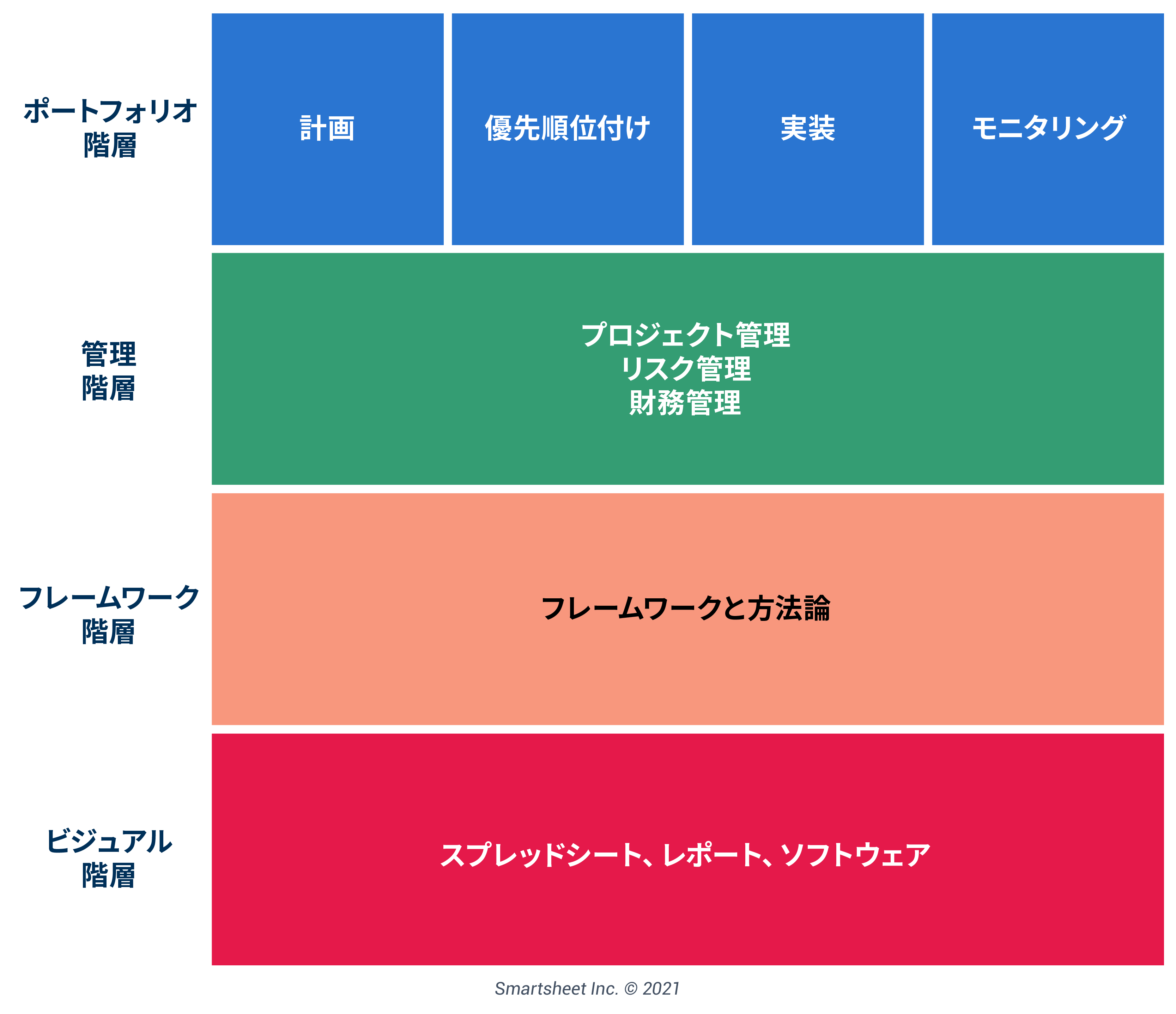
IT ポートフォリオ管理の成功には、多くの階層が関わっています。
- ポートフォリオ階層: ポートフォリオ階層は、ポートフォリオの計画、優先順位付け、実装、監視という基本的要素で構成されます。これらの要素は常に作用しており、すべて同等に重要です。
- 管理階層: 管理階層は、ポートフォリオ内の個々のプロジェクトに対するサポートの管理に重点を置いています。この階層には、プロジェクト、リスク、財務管理の戦略とプロセスが含まれます。
- フレームワーク階層: フレームワーク階層は、マネージャーが管理階層とポートフォリオ階層にどのようにアプローチするかを決定します。この階層では、マネージャーはポートフォリオの管理および優先順位付けの方法を開発します。
- ビジュアル階層: ビジュアル階層には、ソフトウェアによって生成されたレポート、スプレッドシート、ダッシュボードが含まれます。この階層は、ポートフォリオのステータスを報告および共有するときに、他のすべての階層を視覚的に表します。
ステップバイステップの IT ポートフォリオ管理プロセス
IT ポートフォリオの管理には 4 つのステップが必要です。まずは、ポートフォリオ内のプロジェクトとその重要業績評価指標 (KPI) を整理します。そして、会社の使命を特定し、優先順位付けのフレームワークを確立します。その後、プロジェクトに優先順位を付け、リソースを割り当てます。最後に、進捗状況を継続的に監視およびレビューします。
- 社内の IT プロジェクトを列挙する: 現行のプロジェクトと潜在的なプロジェクトのリストを作成し、それぞれに対するさまざまな KPI も定めます。優先順位付けのステップで参照できるように、この情報を整理します。
- 会社の使命を特定する: 会社の使命を活用してポートフォリオの目標を定め、ポートフォリオ管理のフレームワークを確立します。
- プロジェクトの優先順位付け: 戦略、緊急性、重要性に基づいてプロジェクトのリストに優先順位を付けます。最も成果が期待できるプロジェクトにリソースを割り当てます。IT プロジェクトの優先順位付けについては、「The Ultimate Guide to IT Project Prioritization (IT プロジェクトの優先順位付けに関する究極のガイド)」をご覧ください。
- レビューと監視: このリストを再検討するためのタイムラインを確立します。プロジェクトが完了に近づくと、ポートフォリオの状況が変化し、調整が必要になる場合があります。
詳細については、ポートフォリオ管理プロセスのガイドに関する記事をご覧ください。
IT プロジェクト ポートフォリオ管理の一例
IT プロジェクト ポートフォリオ管理は複雑です。ソフトウェアとダッシュボード ツールを使用すると、詳細をより簡単に表示して共有できます。
独立系製品・イノベーション変革コンサルタントである Pat Khumprakob 氏は、IT ポートフォリオの優先順位付けと整理に関する自身の経験を次のように語っています。「大企業の場合、私は通常、インフラストラクチャのメンテナンスが 30%、既存製品の機能強化が約 50%、新規事業が 20% (場合によってはそれ以上) というポートフォリオ構成を目指します」。
「プロジェクトや取り組みの優先順位付けには多くの要素が関係します。プロジェクトの期間に着目する企業もあれば、何か新しいものがあるかどうか、あるいは実行しなければならない重要な取り組みがあるかどうかに着目する企業もあります。プロジェクトの優先順位付けを考える際、まず戦略的成果とどのように関連付けることができるかを見るようにしています。企業の中核には、重点を置くべき戦略的な目標があります。これらの目標は収益またはコスト削減に基づく場合がほとんどですが、顧客満足度、信用格付け、コンプライアンス適合など、他の目標も考えられます。これらの戦略的成果のうち、どれが最も重要であるかを理解することで、それに基づいてプロジェクトの優先順位を決めることができます」。
同氏は次のように続けます。「ここからが厄介なところです。戦略的なフレームワークや目標への適合だけに基づいて優先順位付けを行うと、失敗を招くことになります。戦略的目標への適合以外にも考慮すべき要素は数多くあります。リソースと人員配置について考えてみましょう。最も重要な戦略的目標をサポートするための IT 作業が必要なプロジェクトが 3 つあったとします。会社がそれらのプロジェクトに人員を配置できなかったらどうなるでしょうか。人員配置は非常に難しい課題です。私たちはプロジェクトを直線的で静的な取り組みとして考えがちですが、現実にはプロジェクトは非常に活発で変動しやすいものです」。
「私が実践していることは、今わかっていることを考慮して最善の選択をすることです。そこからは、次に優先すべきプロジェクトにおいて、意思決定をサポートする十分なデータが揃うよう、監視と調整を行います。結局のところ、計画を立てたり意見を述べることよりも、構築したり実行したりすることに時間を費やしたいのです」。
IT Portfolio Status Report Template

Download IT Portfolio Status Report Template for
Microsoft Excel
| Google Sheets
When to Use This Template: Use this IT portfolio status report template to summarize project progress, schedule health, budget performance, and more. It helps document risks, issues, and resource concerns across your IT portfolio. It’s ideal for recurring stakeholder updates, executive reviews, and portfolio meetings that require a quick view of active and planned work.
Notable Template Features: This template includes a live project timeline, planned project timeline, and financial status section for comparing budgeted costs, actual costs, forecasts, and variances. Use the color-coded status fields to flag proposed, in-progress, complete, overdue, scheduled, and review-ready projects.
IT Project Portfolio Dashboard Template
Download IT Project Portfolio Management Dashboard Template for
Microsoft Excel
| Google Sheets
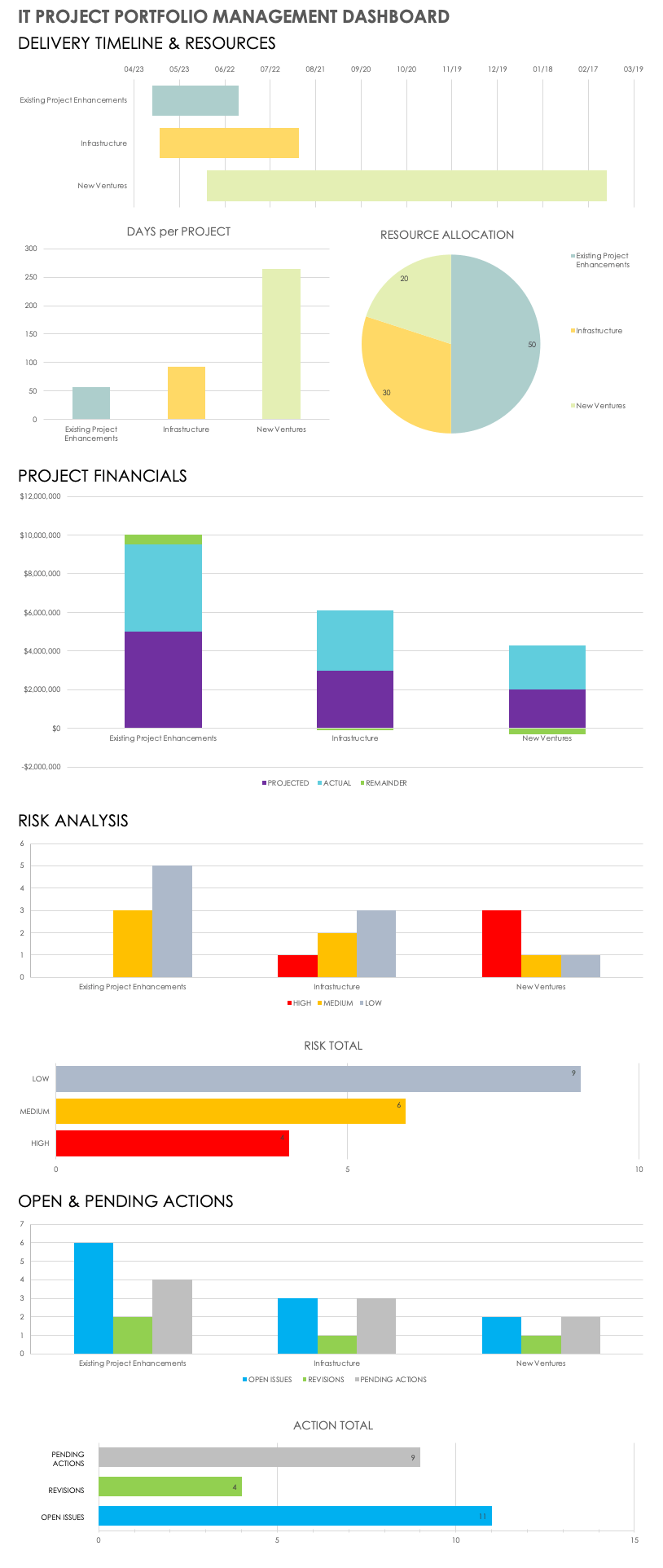
When to Use This Template: Use this IT project portfolio dashboard to review delivery timelines, resource allocation, project financials, risk levels, and open action items across your IT portfolio. It’s ideal for presenting portfolio status to stakeholders or comparing investment categories such as enhancements, infrastructure, and new ventures.
Notable Template Features: This dashboard template includes a delivery timeline, a resource allocation chart, a project financials section, risk analysis charts, and an open and pending actions tracker. Use the visual charts to compare project duration, budget performance, risk severity, open issues, revisions, and pending work across portfolio categories.
IT Project Portfolio Management Expert Example
IT project portfolio management often requires leaders to balance maintenance work, product improvements, and new initiatives while weighing strategy, staffing, timing, and risk. Software dashboards can simplify tradeoff reviews by centralizing project details, status, resources, and decision criteria.
Pat Khumprakob, an independent product and innovation transformation consultant, shares his experience prioritizing and organizing IT portfolios.
“For a large company, typically I look for a portfolio mix of infrastructure maintenance at 30 percent, existing product enhancements at about 50 percent, and new ventures at 20 percent (maybe more)," he says.
“A lot of factors go into project and initiative prioritization. Some companies will look at project length, others [will look at whether] something is new, others [at whether] there are major initiatives that have to happen,” Khumprakob continues. He says that prioritization should “map to strategic outcomes.” A business has strategic goals to focus on. “Most often these goals are revenue or cost savings-based, but there can be others, such as customer satisfaction, credit ratings, or compliance alignment,” Khumprakob says. “By understanding which of these strategic outcomes are most important, projects can now be prioritized against them.”
“This is where things can get tricky,” he continues. “If we were to only focus prioritization based on alignment to a strategic framework or goal set, we’d be setting ourselves up for failure.”
He says there are many factors to consider other than alignment to strategic goals. “Take resourcing and staffing — if there were three projects that required IT work to support the top strategic goals, what happens if the company can’t staff them? Staffing is a very tricky challenge. We like to think of projects as linear, static engagements, but reality shows that they are very much alive and volatile.”
“What I do is take into consideration what I know now and make my best choice. From there, it’s a matter of monitoring and adjusting so the next project to be prioritized has more data to support the decision,” he concludes. “In the end, I’d rather spend time building and doing instead of planning and pontificating.”
IT ポートフォリオのベスト プラクティス
この度、専門家に実証済みの IT ポートフォリオ管理の実践について尋ね、その中から素晴らしいアドバイスをいくつかまとめました。
- PMO の作成と監視: さまざまなポートフォリオのニーズをサポートするために、プロジェクト管理オフィス (PMO) を設置します。これらのプロジェクトが適切に管理されるよう、IT ポートフォリオ専任の部門を設けます。

- 「PMO は、ポートフォリオ内のさまざまなプロセスを監督し、組織内の取り組みを調整することに特化したビジネス ユニットです。プロジェクトの問題を管理する際に、IT ポートフォリオ管理専任の部門を設置すると、最も複雑なプロジェクトでも迅速かつコスト効率よく解決できるようになります」と Physicians Thrive (フィジシャンズ スライブ) の創設者である Justin Nabity 氏は言います。
- リスク管理戦略を確立する: ポートフォリオ全体でリスク管理戦略を標準化し、事業の進行に合わせてリスクを再評価するためのタイムラインを含めます。
「レビュー段階における重要なステップは、プロジェクトのリスクとリターンの特性を評価することです。組織的なリスク管理戦略を策定することで、企業は PPM の成功に近づくことができます。これは、個々の取り組みを比較するのではなく、各プロジェクトの固有のリスクと潜在的なリスクを評価し、それをポートフォリオ全体に照らし合わせることから始まります。ビジネス リーダーは、プロジェクトごとにリスク評価を 1 回だけ実行するという過ちを犯さないように注意する必要があります」と Nabity 氏は言います。 - 優先順位付けの基準を慎重に選ぶ:

- プロジェクトがビジネスに付加価値をもたらす可能性を判断します。「ポートフォリオの優先順位付けについて入念に計画された方法がない組織は、あまり見込みのないベンチャーに投資してしまう可能性があります」と Nimble Made (ニンブル メイド) の共同創設者である Tanya Zhang 氏は言います。
- 柔軟に対応する: 新しいプロジェクトのタイミングを調整して、IT チームに必要なリソースが確保され、過度の負担がかからないようにします。「複数のビジネス部門にまたがる目標やニーズは、相互に排他的であったり、重複したり、時間の経過とともに変化したりする場合があります。最も重要な取り組みを他の取り組みから切り離し、頻繁に確認し続けることが重要です」と Zhang 氏は言います。
- 利用可能なソフトウェアを使用する: IT ポートフォリオ管理ソフトウェアを使用してレポートとダッシュボードを作成し、プロセスを合理化します。ソフトウェアに合わせてプロセスを変更するのではなく、会社のプロセスに適合するソフトウェアを見つけるようにしてください。
IT ポートフォリオ管理とプロジェクト ポートフォリオ管理の違い
IT ポートフォリオ管理では IT 部門とそのリソース管理のみを扱いますが、プロジェクト ポートフォリオ管理では特定のプロジェクトの成功とタイムラインに重点が置かれています。
IT プロジェクトは、リスクが高い一方で、利益も高い傾向があります。IT プロジェクトが会社の目標に準拠し、予算内に収まり、指標を達成できるものであることが重要です。初期段階で経営陣の賛同を得るためには、透明性と標準化されたレポートも重要です。
IT ポートフォリオ管理の歴史
IT 部門が拡大するにつれて、マネージャーはその特定のニーズに対応するための戦略を必要とするようになりました。当初はプロジェクト中心の管理に重点を置いていた IT ポートフォリオ管理は、ビジネス戦略やさまざまなチームと関係者間の相互接続性をより重視するように進化しました。
「情報技術」という用語は、1978 年に初めて引用されました。「ポートフォリオ管理」という用語はそれよりも早い 1950 年代より使用されており、その当時は企業がプロジェクトをグループ化してリスクと潜在的な利益を評価し始めた時期に当たります。1950 年に初めて導入されたデミング サイクルは、4 つのアプローチを概説した初期のポートフォリオ管理戦略です。計画、実行、評価、改善モデルでは、プロジェクト グループの結果を改善するために、ビジネス プロセスを継続的に整理およびレビューする必要性が強調されています。
1970 年代初頭、企業は IT 部門を従来の部門の延長として扱っていました。しかし、コンピューター技術が発展するにつれて、IT 部門には新しい管理基準が必要であることが明らかになりました。
2002 年、クリス・ヴァーホフ (Chris Verhoef) は『Science of Computer Programming (原題)』の記事「Quantitative IT Portfolio Management」でこれらの新しい要件を概説しました。Verhoef によると、この新しいアプローチは「それぞれ年間数十億ドルの IT 予算を持つ複数の組織に適用されており、組織における最大の生産要素である情報技術を経営幹部が把握する上で役立っている」とされています。このアプローチは、今日の IT ポートフォリオ管理の一般的な戦略の基盤となっています。
IT Portfolio Management FAQs
IT portfolio management focuses on technology investments, systems, applications, infrastructure, IT resources, and technical risk. Project portfolio management applies more broadly to projects across the organization. ITPM often requires closer attention to cybersecurity, compliance, technical debt, system dependencies, lifecycle planning, and IT service needs.
An IT organization should adopt portfolio management to improve visibility, prioritize the highest-value work, manage limited resources, and connect technology investments to business goals. ITPM also helps leaders reduce duplication, justify funding decisions, balance risk, and explain portfolio decisions to executives and stakeholders.
ITPM helps manage technical debt and lifecycle risk by improving visibility into aging systems, unsupported or duplicated applications, and other technology gaps. This helps leaders assess business value and prioritize remediation work, replacements, and maintenance as needed.
Measure IT portfolio performance by tracking financial, delivery, resource, risk, and value metrics together. Common measures include budget variance, schedule status, resource capacity, project health, benefits realization, risk exposure, application health, service impact, technical debt, and alignment between IT investments and business priorities.
To get started with IT portfolio management, create a clear inventory of current IT projects. Describe all your systems and note your costs, risks, owners, and resource needs. Then define your criteria to prioritize the highest-value initiatives. Create a simple reporting cadence before adding more advanced dashboards, automation, or governance workflows.